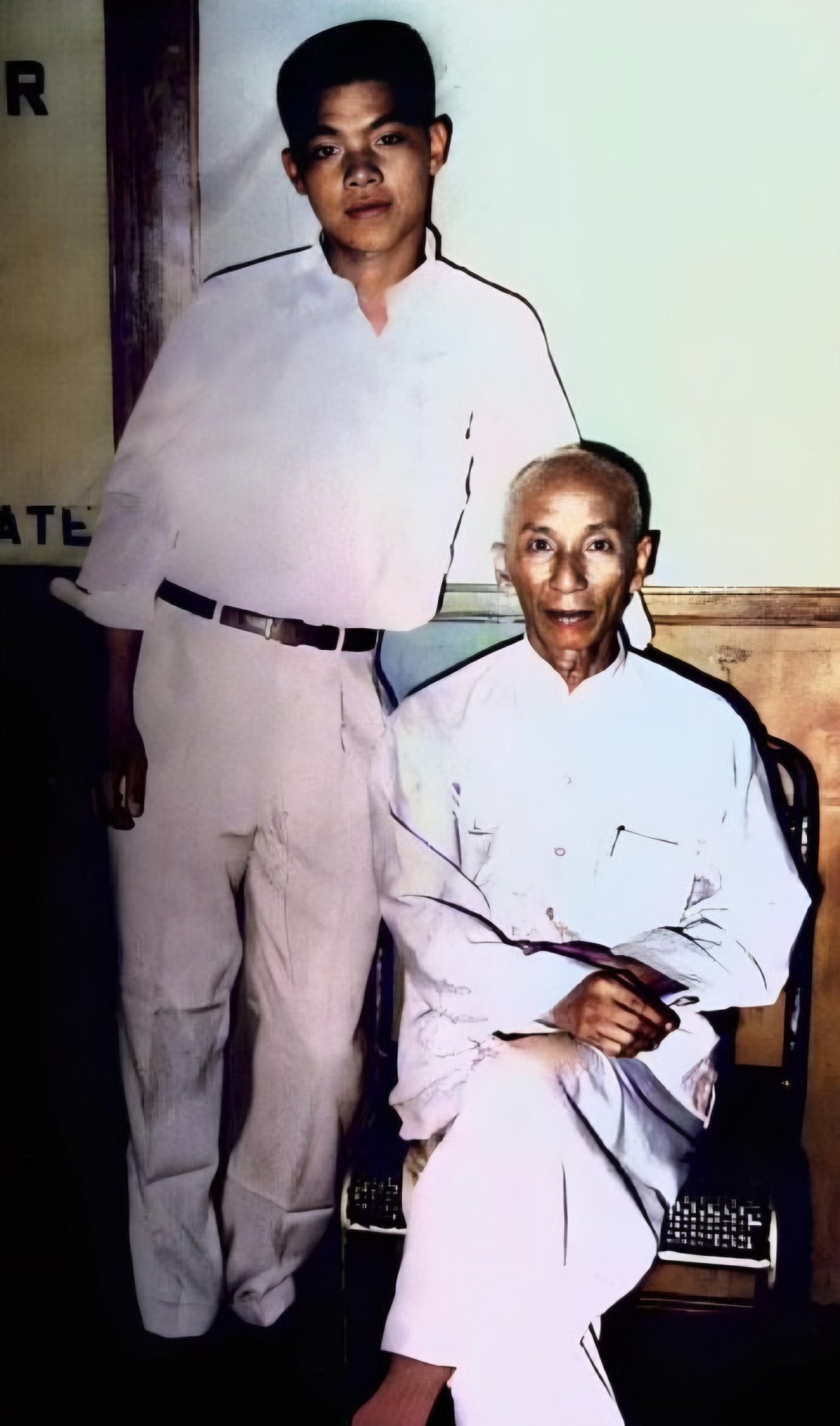
Grandmaster William Cheung’s life story is one of tradition, resilience, and global influence. From humble beginnings in Hong Kong to training legends like Bruce Lee, Cheung’s Wing Chun has shaped martial arts worldwide. This article explores the truth behind the controversies, the impact of his teachings, and the legacy carried on by his dedicated students.
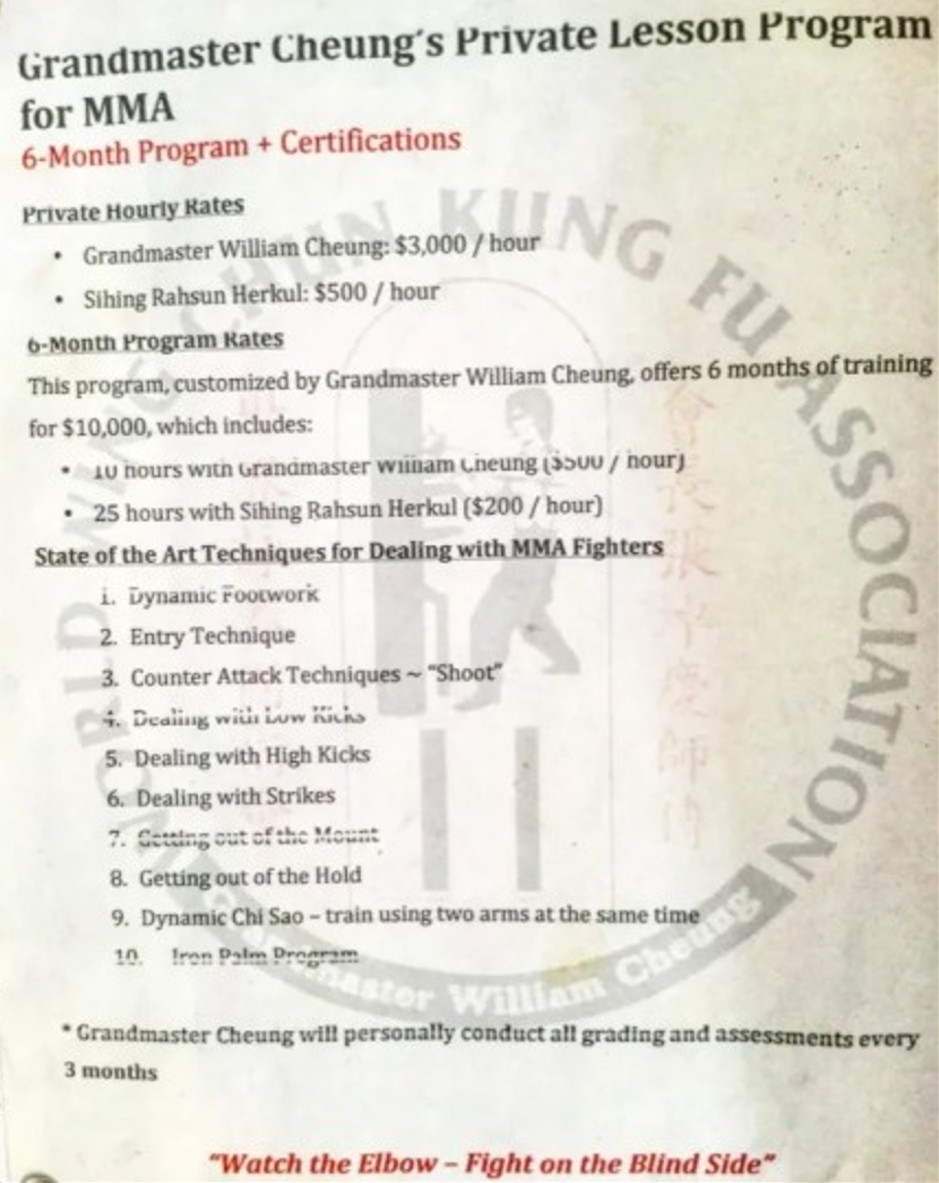
The $3,000 Shockwave: How a Wild Rumor Exploded Across MMA Forums
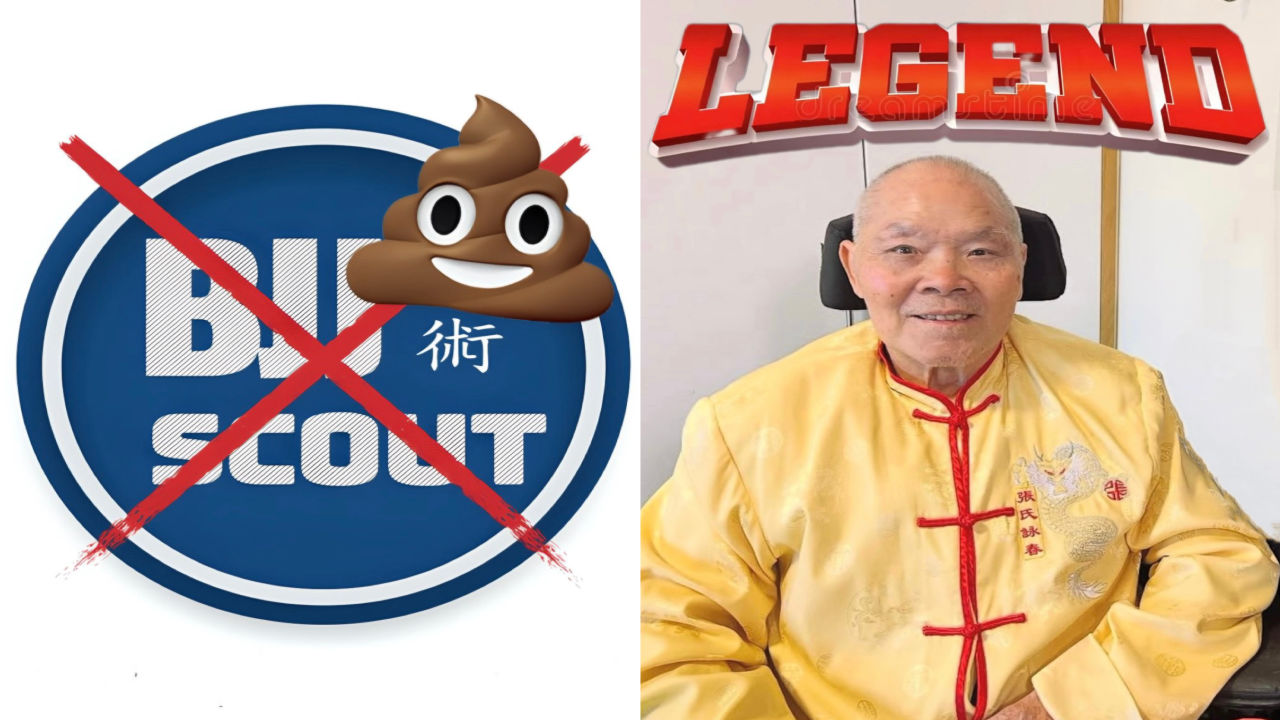
A Facebook page called BJJ Scout—known for mocking and misrepresenting traditional Kung Fu—sparked a false rumor claiming Grandmaster William Cheung was selling a $3,000 online certification. The claim, flat-out denied by Cheung’s son Andrew, quickly spread across martial arts forums.
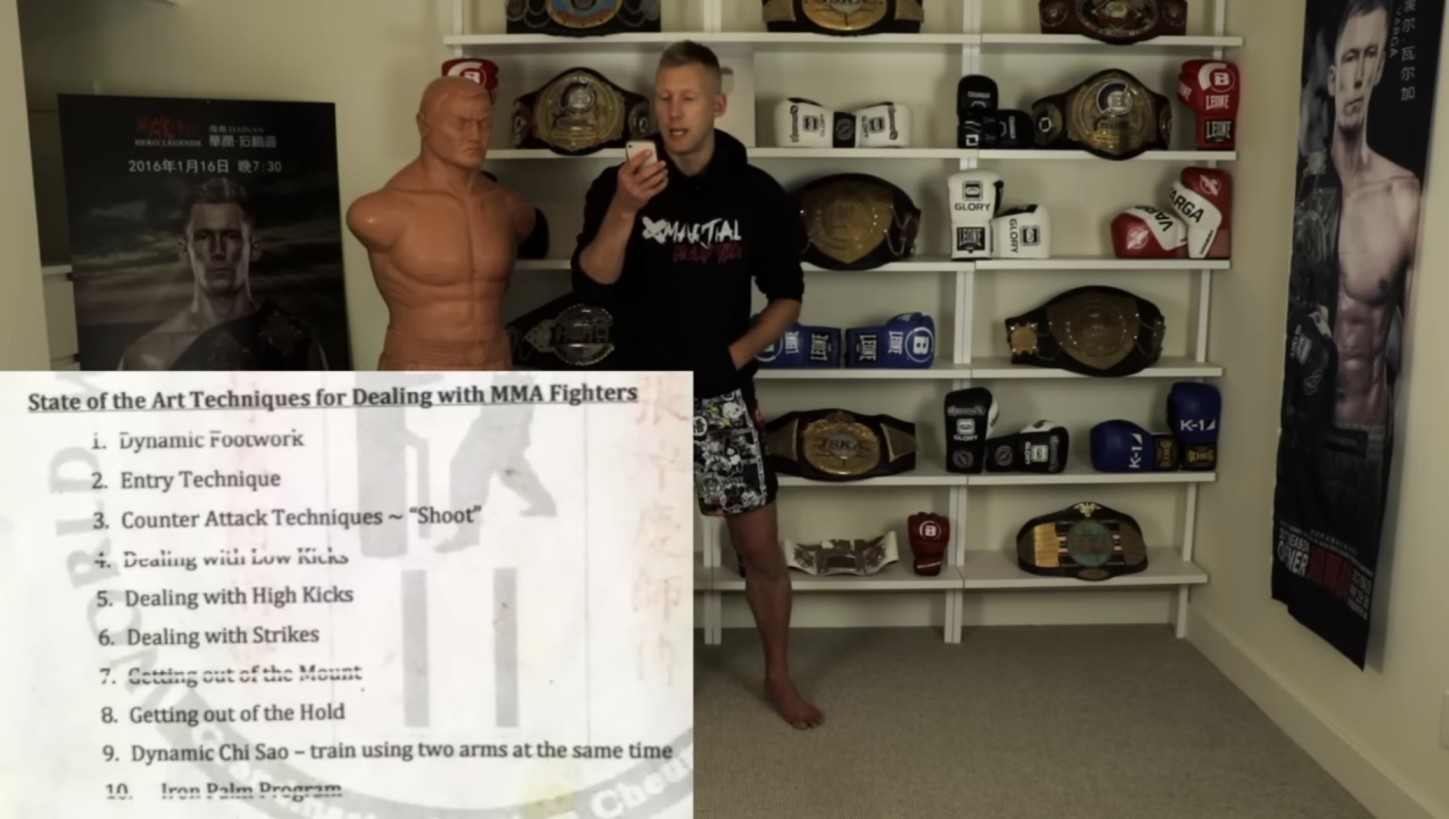
Soon after, Canadian kickboxer Gabriel Varga, who holds a mediocre 1–1 MMA record, jumped on the trend with a YouTube video called “$3000 An Hour To Train w/ Kung Fu Grandmaster & DEFEAT MMA” attacking the so-called $3,000 Wing Chun program — a program that doesn’t even exist. In the video, Varga claims that real martial arts training requires physical contact, partner drills, and live sparring. But here’s the irony: he sells his own expensive online training videos that offer none of those things. No contact. No partners. No live feedback. Just him on a screen. His attacks on Grandmaster Cheung aren’t just misleading — they directly contradict his own business model.
For over 60 years, Grandmaster Cheung taught real hands-on combat training in dojos around the world — a legacy built through experience, not clicks. Critics like Varga and BJJ Scout, on the other hand, hide behind screens, peddling clickbait and false claims to tear down legends they could never stand beside.
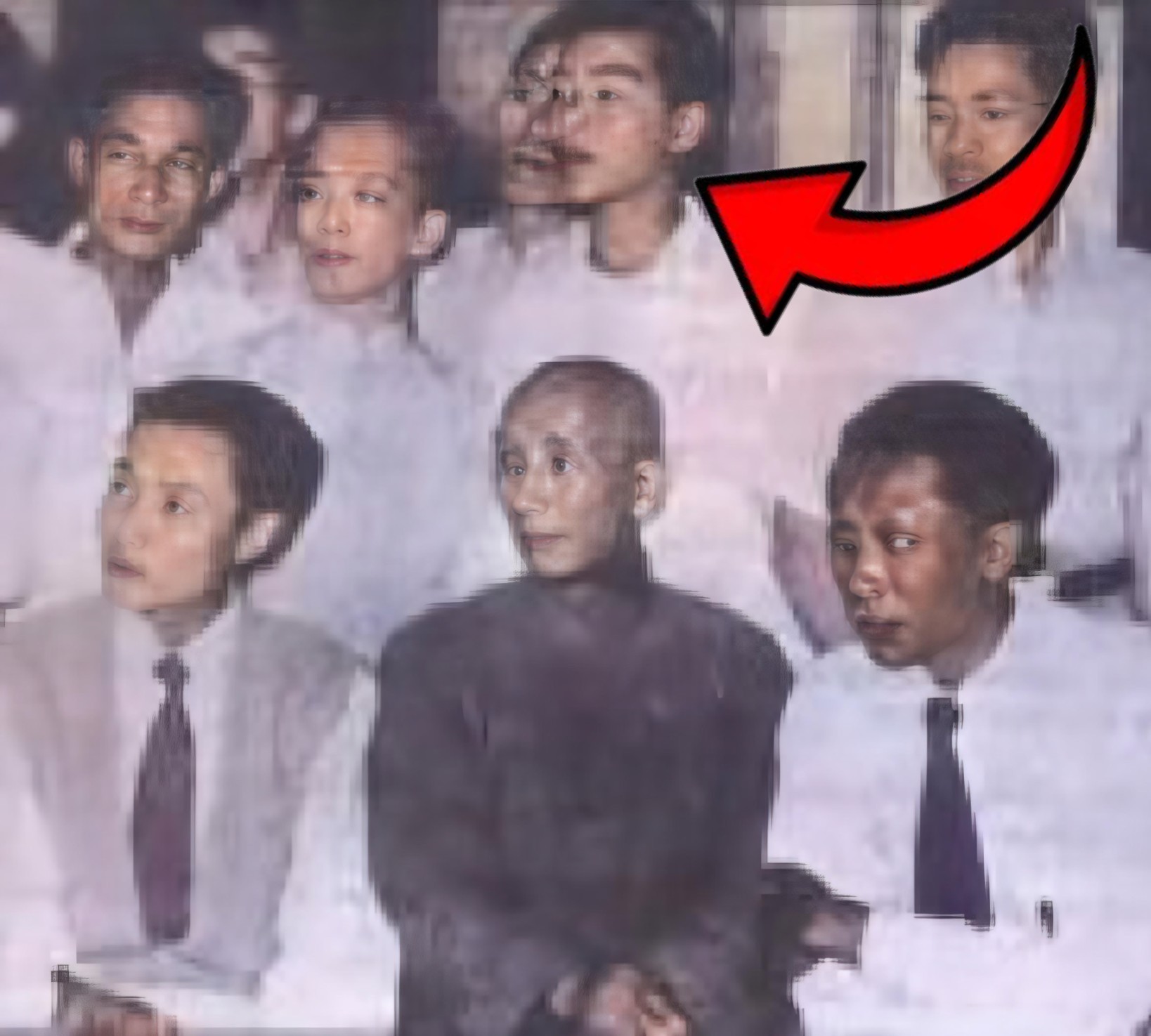
The Man Behind the Controversy — Who Is Grandmaster William Cheung?
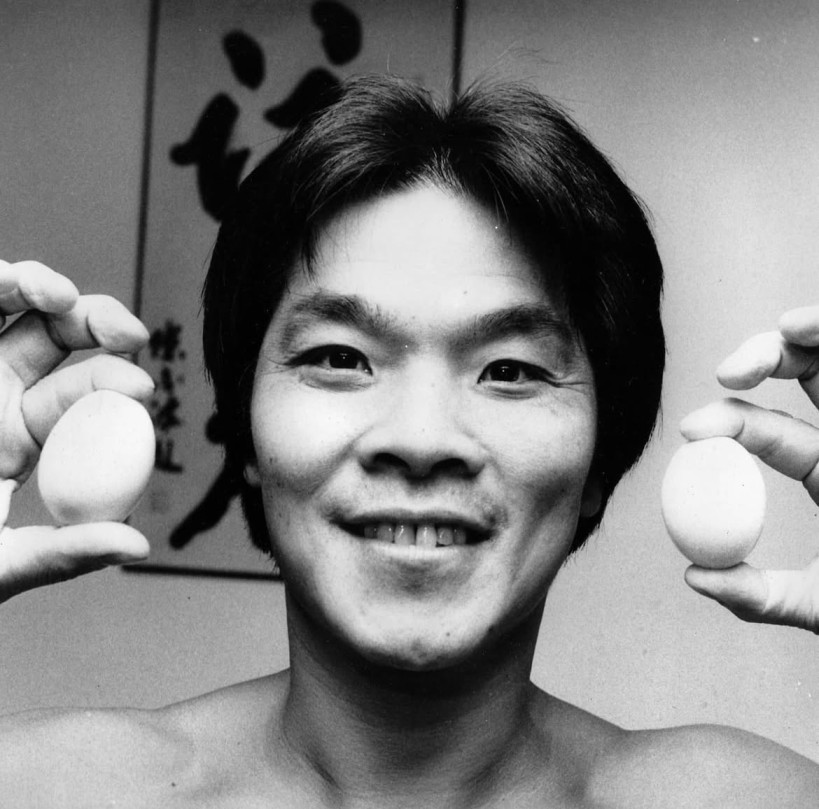
William Cheung was born in 1940 and raised in the gritty neighborhoods of Kowloon, where street fighting was practically a rite of passage. He began training in Tai Chi around the age of 10 or 11, but the soft art couldn’t keep up with the daily schoolyard challenge matches that shaped his youth. Everything changed in 1954 when he witnessed a frail, older man—Ip Man—easily dismantle a feared gang leader. Stunned, Cheung became Ip Man’s live-in student from 1954 to 1958, learning what would later be called the complete Traditional Wing Chun system, including the closely guarded Leung Bik lineage. Cheung introduced a young Bruce Lee to Ip Man that same year, helping kickstart one of martial arts’ most iconic legacies. Known as one of Ip Man’s fiercest fighters, Cheung racked up a reputation in rooftop brawls and once shattered a Choy Lay Fut master’s tailbone with a single palm strike. On his way to Australia in 1959, Cheung was ambushed on a ship by over a dozen Triad thugs armed with knives—despite being stabbed three times, he fought them off, drenched in blood, until the ship’s captain broke it up. That survival-forged legacy would later make him one of Wing Chun’s most respected — and most controversial — grandmasters.
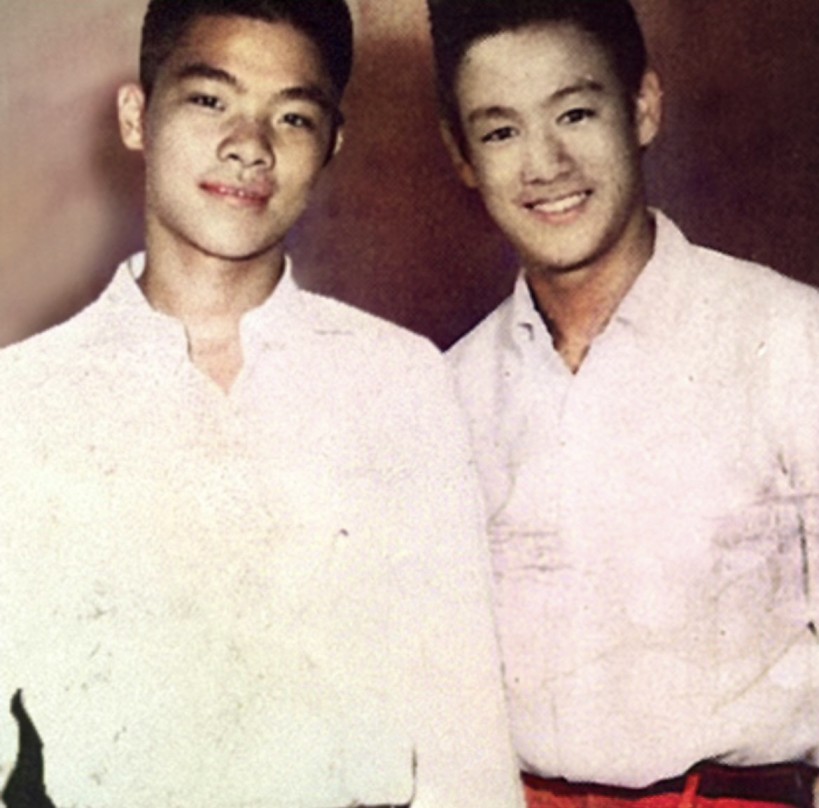
Without William Cheung, There Would Be No Bruce Lee — or Wing Chun as We Know It
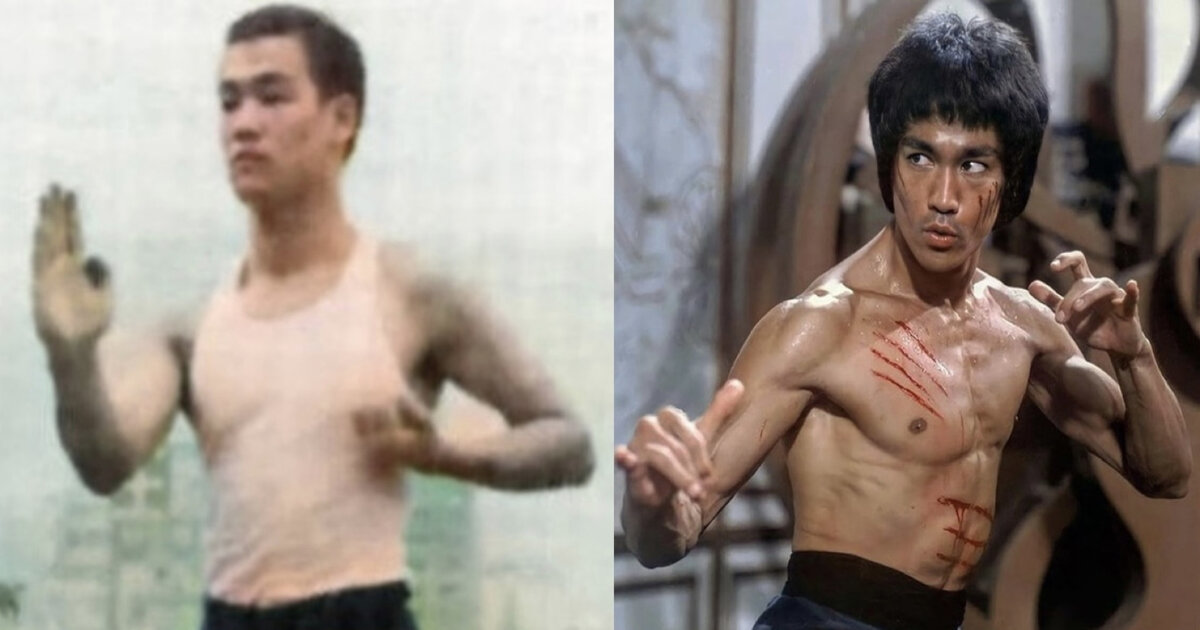
William Cheung first met Bruce Lee when Bruce was just nine years old, having known him as a child star facing constant fights and challenges due to his mixed heritage—his mother was half German—and the racism he endured. Growing up, Bruce struggled to defend himself despite some Tai Chi training from his father. Cheung introduced Bruce Lee to Ip Man, advocating on his behalf despite traditional rules against teaching non-Chinese students. Over time, Bruce was accepted as a student, and the two became close friends and training partners. Even after Bruce moved to America, they kept in contact through letters, with Bruce often saying that William Cheung was the best Wing Chun fighter out of all of them. Without William Cheung’s introduction and support, there might have been no Bruce Lee, no Wing Chun as the world knows it, and Ip Man’s legacy would have been very different.
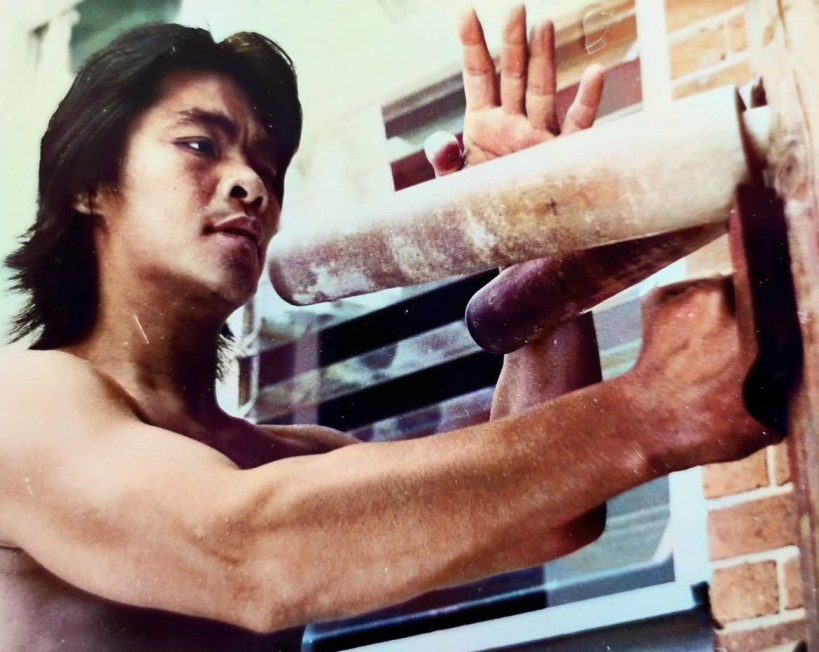
The Secret Wing Chun Art Ip Man Only Trusted One Student to Learn — And Why He Hid It for Years
Out of all his students, Ip Man trusted only one man with the complete, traditional Wing Chun system: William Cheung. Early in their time together, Ip Man took Cheung aside and told him he would teach him a more advanced version of Wing Chun passed down from Leung Bik—on the strict condition that he never share it with anyone, not even other students, until the time was right. At the time, Cheung was living in Ip Man’s home, and it was during the late hours—long after regular classes ended—that Ip Man quietly revealed the art’s deepest secrets.
These sessions focused on the original foundations of Wing Chun: blindside attacks, redirection, and precision-based techniques designed to overcome stronger opponents using little to no force. While other senior students were taught a modified, streamlined version, Cheung was given the full, traditional system—privately, and with care. Ip Man kept this version hidden out of concern for misuse, cultural misrepresentation, and preserving the system’s purity.
Some later dismissed Cheung’s knowledge as self-made—but that would mean he created an entire advanced system of Wing Chun on his own, making him a martial arts genius. The truth is far simpler: Ip Man personally entrusted him with these secret teachings and told him to keep them hidden, as is often the case in traditional Chinese martial arts. That sacred trust—and what Cheung preserved—set his legacy apart from everyone else.
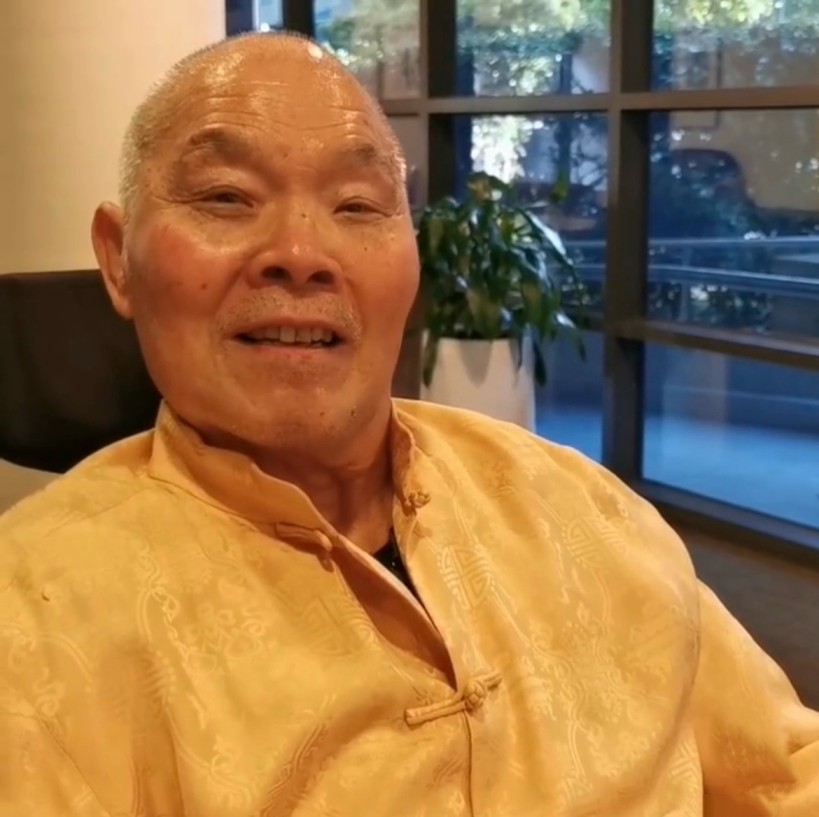
Fact Check: Is the Grandmaster Even Teaching? The Truth About His Health
The internet is full of wild rumors, but Andrew Cheung—son of Grandmaster William Cheung and head of his Wing Chun school—cut through the noise with cold, hard facts. Calling out online critics, Andrew fired back: “Nice to see grapplers trying something new by poking fun at Kung Fu—especially with such minimal effort.” He laid it out plainly: “My father has been in a wheelchair for nearly a decade and is fully retired.” That’s the end of any nonsense about the Grandmaster still teaching or fighting.
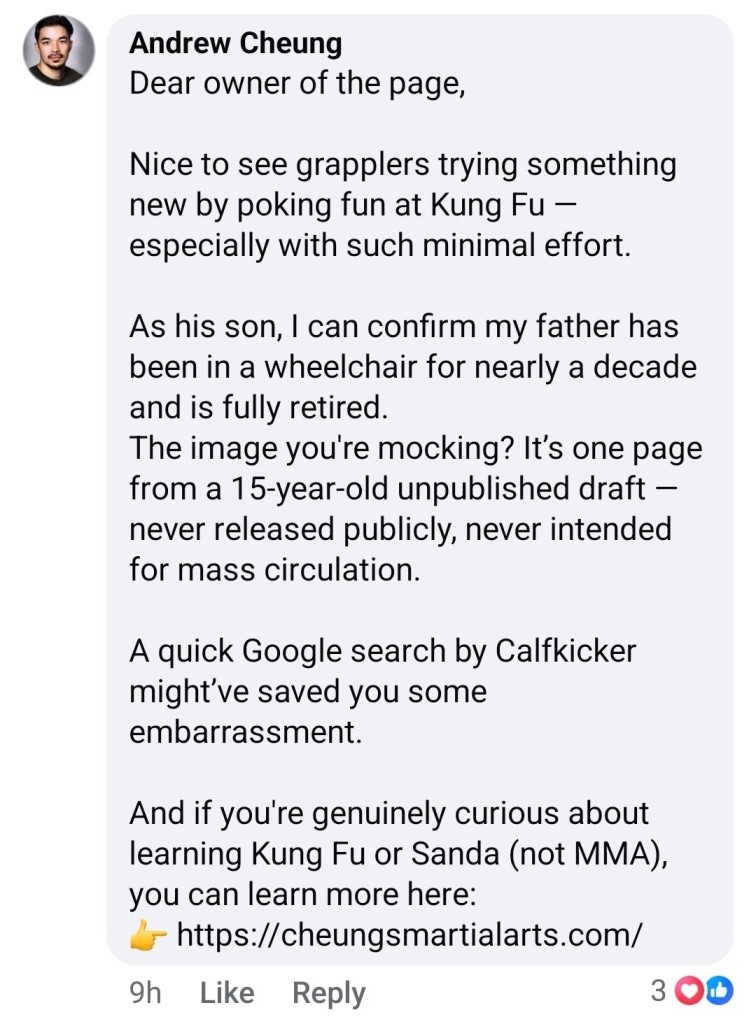
Andrew also dismantled the so-called “evidence” mocked online, explaining: “The image you’re mocking? It’s one page from a 15-year-old unpublished draft—never released publicly, never intended for mass circulation.” He didn’t hold back on who was behind the falsehoods either, adding that a simple Google search by “Calfkicker” (BJ Scout’s alias) could’ve “saved you some embarrassment.” For those genuinely interested in Wing Chun Kung Fu or Sanda—not cage-fighting clickbait—Andrew pointed them to the official site (“https://cheungsmartialarts.com/”), where respect, tradition, and truth are still honored.
And frankly, that anyone would stoop to spreading lies about a retired Grandmaster says everything about their martial arts character—or lack thereof.
From Clickbait to Chaos: How the BJJ Community Turned a Meme Into a Mob
The controversy began with a Facebook post by BJJ Scout titled ”$3,000 Online Certification with Wing Chun Grandmaster William Cheung,” which quickly sparked outrage and speculation across martial arts forums. The post ignited harsh criticism from the grappling community, with comments like, “Fake Kung Fu can’t compete with MMA,” and “This grandmaster is selling snake oil.” Many dismissed Wing Chun outright, saying, “Wing Chun is just flashy moves with no real combat effectiveness,” and questioned the value of expensive online courses: “Online certifications for thousands of dollars? What a joke,” and “No live sparring, no partner drills — this is just a scam.” Critics labeled Cheung’s style as outdated, claiming, “Cheung’s Wing Chun is useless in modern fighting,” while others expressed disbelief at the faith some still put in it: “People falling for this shows how desperate they are to believe in magic martial arts.” The $3,000 price tag on the alleged online program was widely condemned as “just a money grab, nothing more,” and many pointed out, “Grandmaster Cheung hasn’t fought anyone in decades, why would anyone listen to him?”
Canadian MMA YouTuber Gabriel Varga has a 1–1 record but comes off like he’s some MMA god—even though both his fights were against regional bums. He fueled the drama with a mocking video titled “$3,000 an Hour to Train with Kung Fu Grandmaster and Defeat MMA,” full of blatant misinformation and disrespect. Both BJJ Scout and Varga propagated false claims about a certification program that doesn’t exist, casting doubt on Grandmaster Cheung’s reputation without basis. In the face of mounting misinformation, Dean Marshall, a longtime student and active-duty U.S. Army serviceman stepped up to defend the grandmaster, writing, “This narrative is completely false.” His voice helped rally the Wing Chun community, pushing back against misinformation and defending the honor of a martial arts legend.
Standing Up for the Grandmaster: His Son and Students Break Their Silence
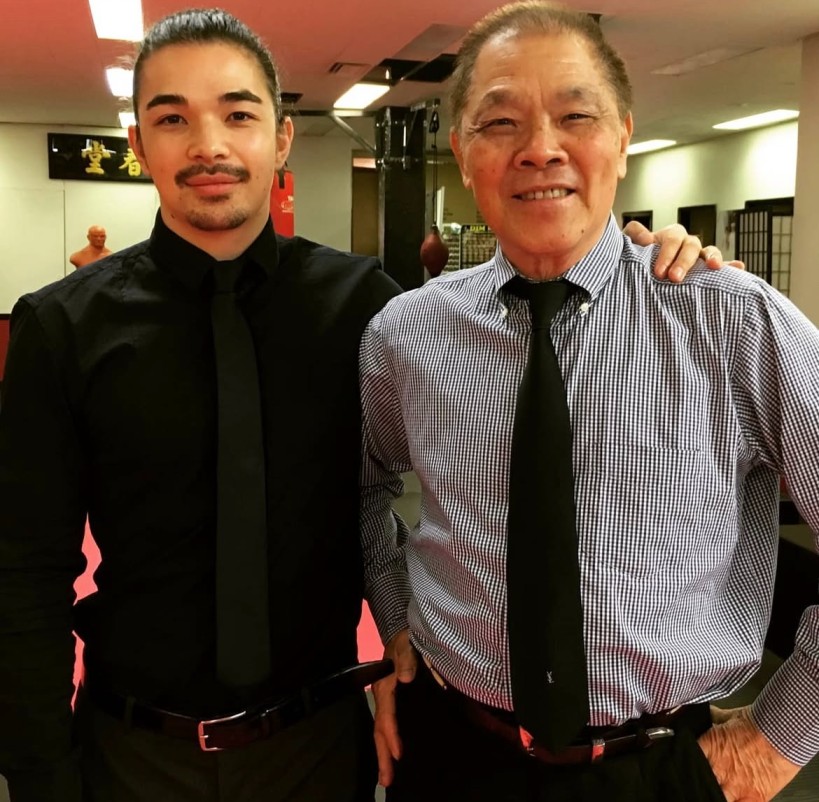
Amid a storm of online rumors and misinformation, Andrew Cheung—the son of Grandmaster William Cheung and head of his school—stepped forward to set the record straight. Addressing a critical Facebook post, Andrew fired back, “My father has been in a wheelchair for nearly a decade and is fully retired.” Andrew also exposed the source of the confusion: “The image you’re mocking? It’s one page from a 15-year-old unpublished draft—never released publicly, never intended for mass circulation.” Taking a subtle jab, he added, “A quick Google search by Calfkicker might’ve saved you some embarrassment.” For those genuinely interested in learning real Kung Fu or Sanda—not MMA—Andrew directed them to the official school website (“https://cheungsmartialarts.com/”), where respect, tradition, and truth remain paramount.
Supporting Andrew’s firm stance, student Dean Marshall publicly defended the grandmaster, calling out false narratives and standing firm on the truth. Dean wrote, “This narrative is completely false,” helping to rally the Wing Chun community against the baseless attacks. Despite the chaos, Andrew’s calm humility shone through as he reassured Dean: “I appreciate the effort but don’t stress — it’s hilarious how much it’s blown up. I’ll get it sorted.” Dean simply replied, “Understood.”
This collective voice of family and students has been crucial in calming the storm, reinforcing the legacy and honor of Grandmaster William Cheung. Their united front reminds everyone that true martial artists uphold integrity, respect, and truth—values far stronger than any online rumor.
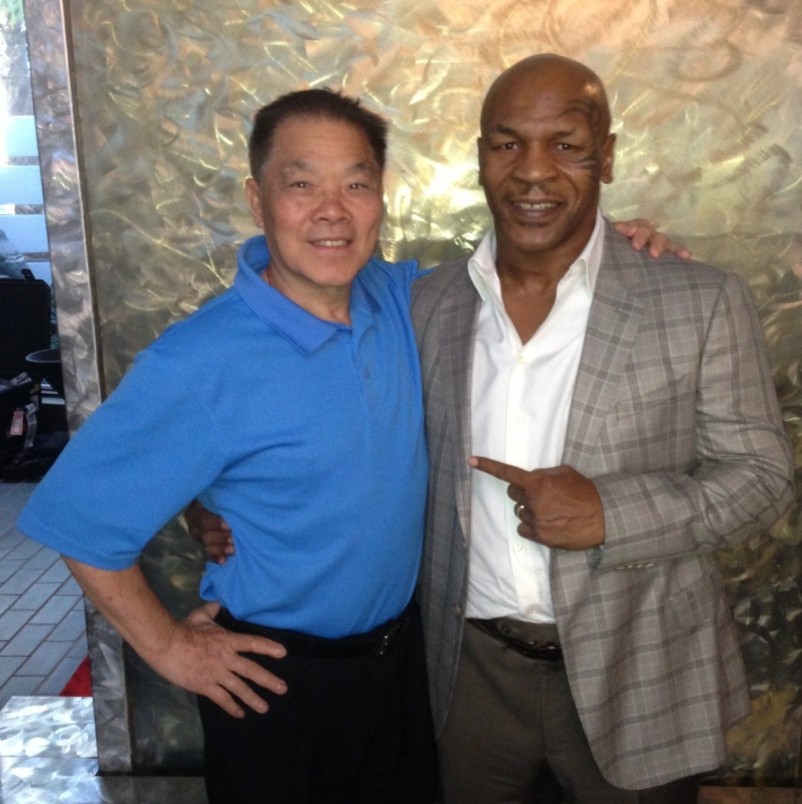
Inside the Legacy: The Celebrities, Community Work, and Global Impact That Define William Cheung’s Life’s Work
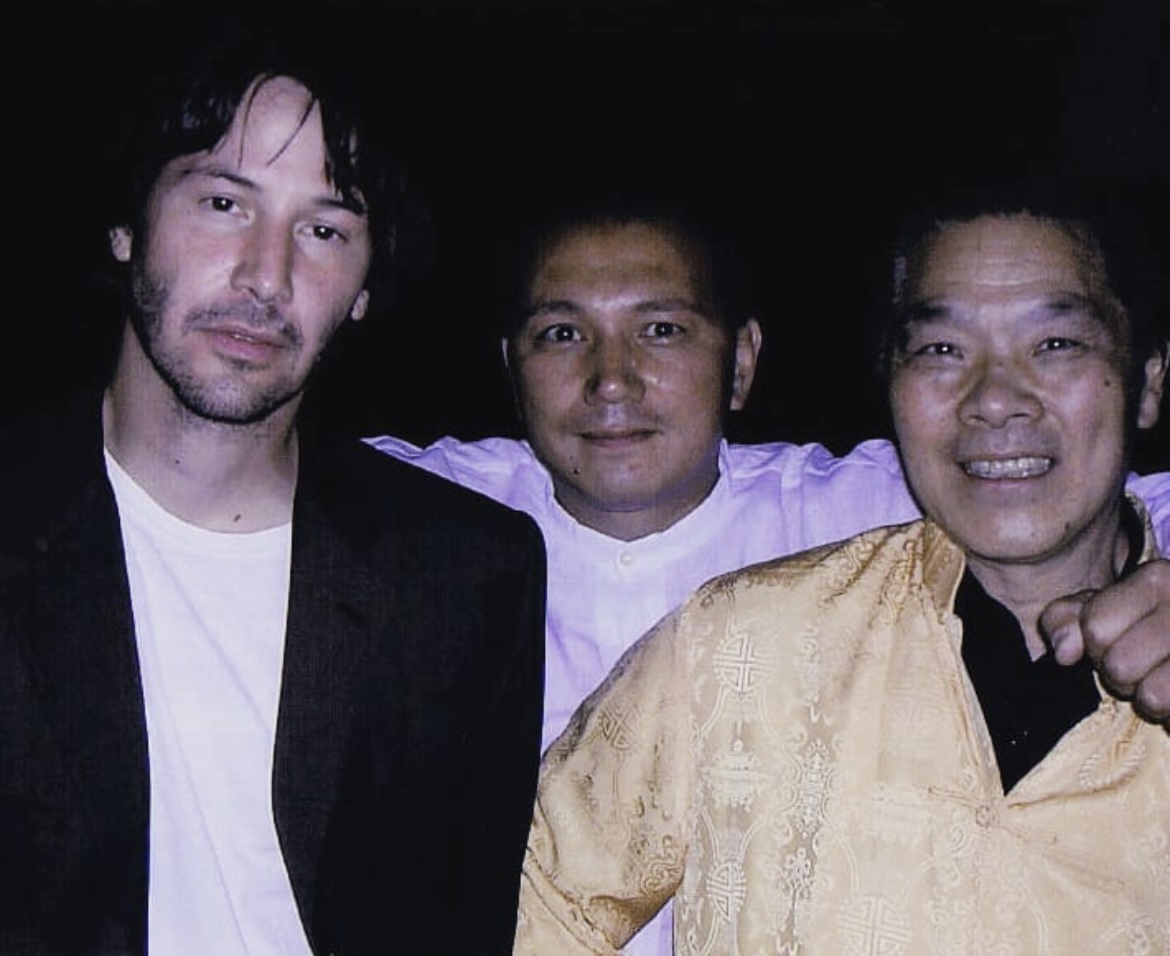
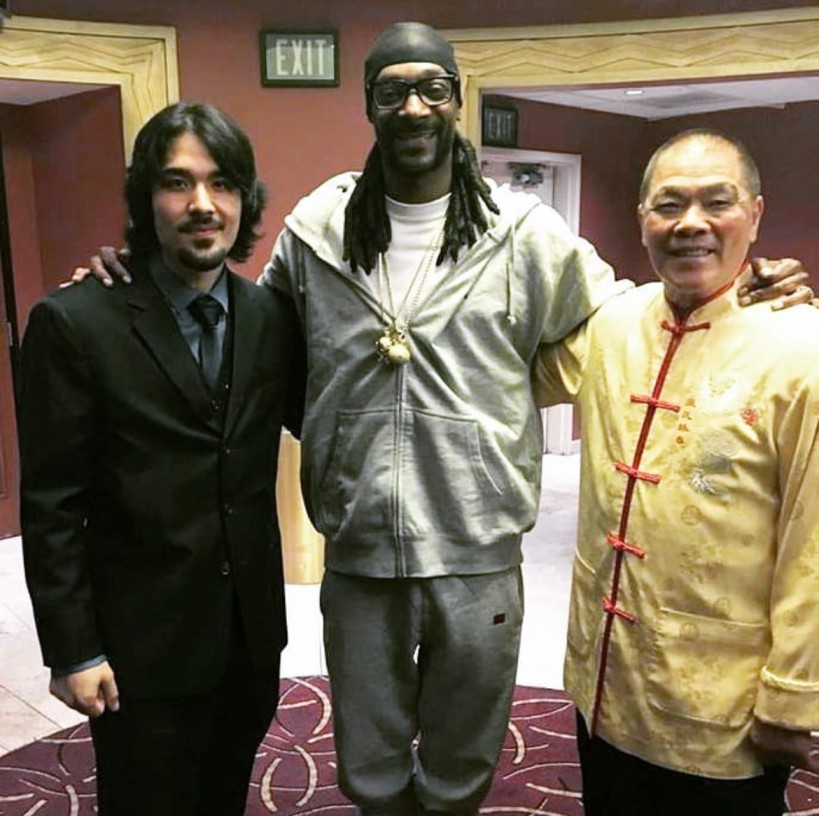
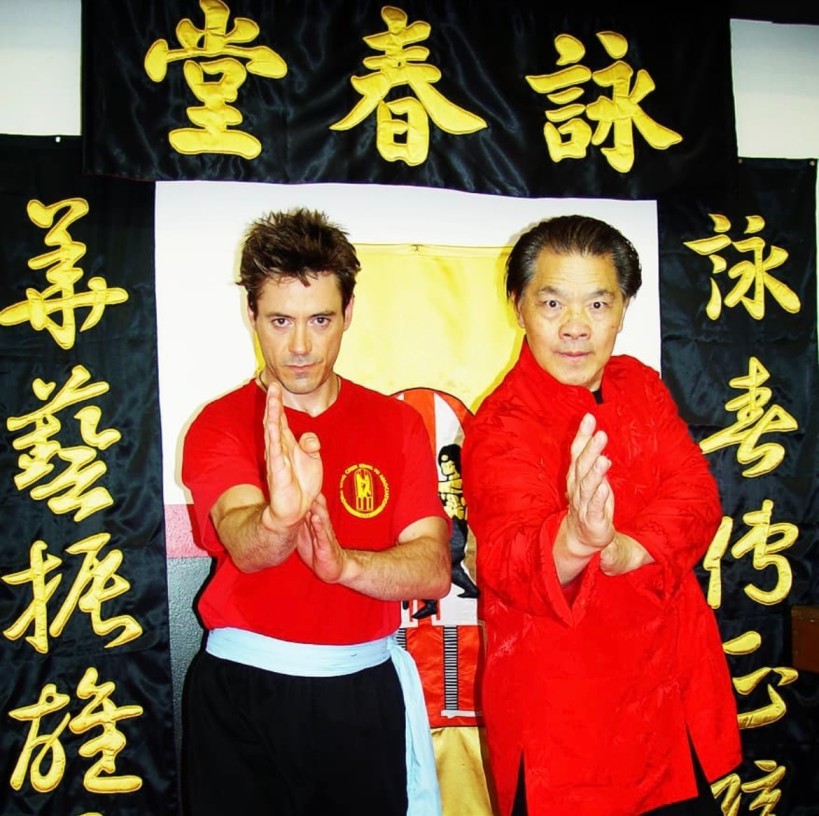
Grandmaster William Cheung’s influence extends far beyond the kwoon. Over the decades, he’s worked with celebrities like Bruce Lee, Mike Tyson, Donnie Yen, Keanu Reeves, Robert Downey Jr., Dan Inosanto, and even Snoop Dogg—proving his reach into Hollywood and pop culture. But it’s not all glamour; Cheung has taught free seminars to at-risk youth, partnered with law enforcement, and led anti-bullying and anti-violence campaigns worldwide.
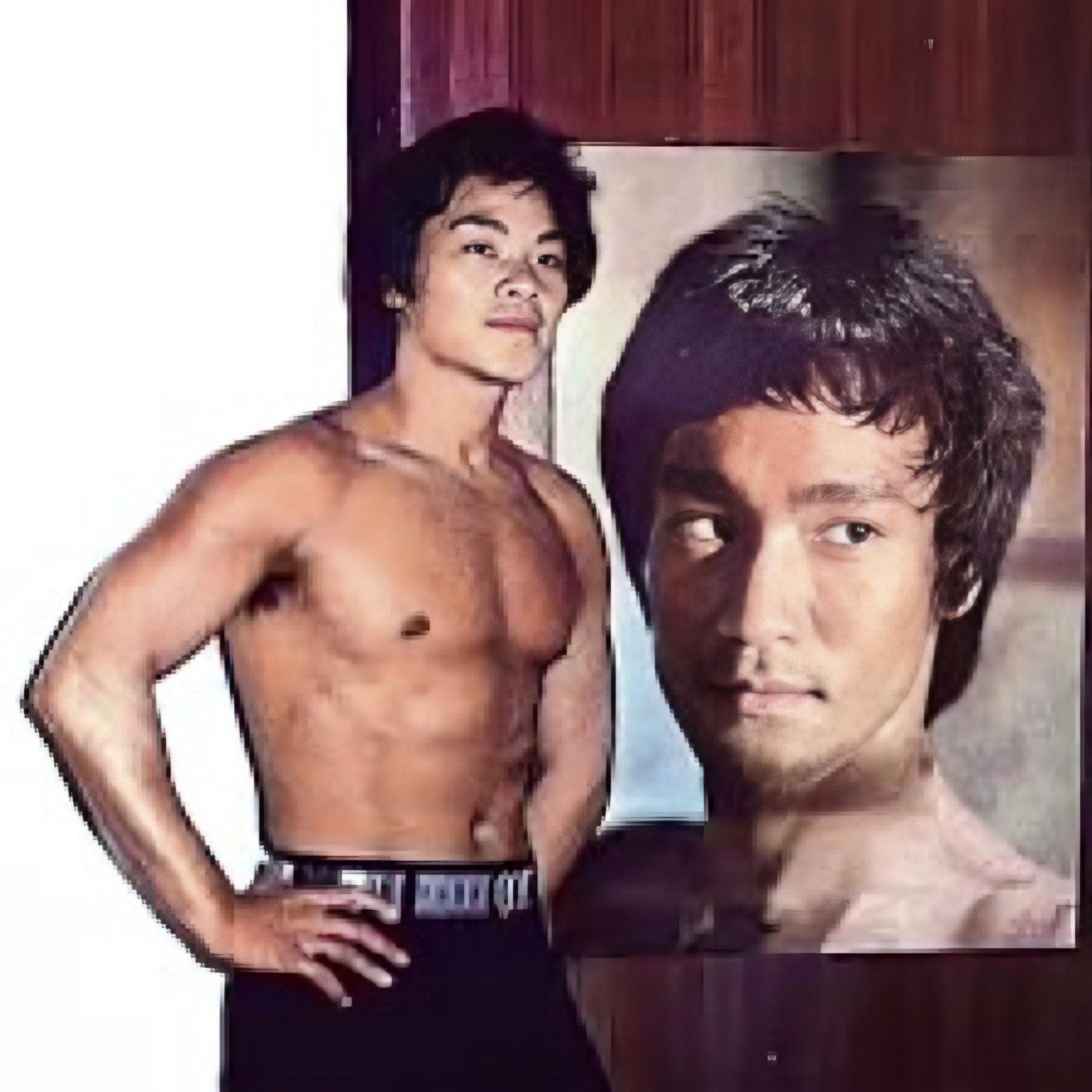
His accolades include being named Kung Fu Artist of the Year (1983), Instructor of the Year (1989), and receiving the Distinguished Law Enforcement Community Impact and Life Achievement Award in 2012. He’s appeared on over 40 martial arts magazine covers and has been honored by prestigious institutions like Foshan Sports University and the Chinese Medical University in Beijing, where he served as a guest professor and senior research professor.
Beyond martial arts, he holds a degree in economics and is a licensed doctor of Chinese medicine, blending science, culture, and combat into one legacy. Through it all, Cheung’s impact remains global—grounded in tradition, community service, and a lifelong mission to teach, inspire, and preserve Wing Chun for generations to come.
From Pupil to Master: How William Cheung’s Students Are Spreading Wing Chun Across the World
Grandmaster William Cheung has dedicated over 45 years to teaching Wing Chun Kung Fu, building a rich legacy rooted in the traditional art passed down from Ip Man. His lifetime of commitment has made him a respected figure worldwide, known not only for his mastery but for his devotion to preserving the original teachings while inspiring students across the globe.
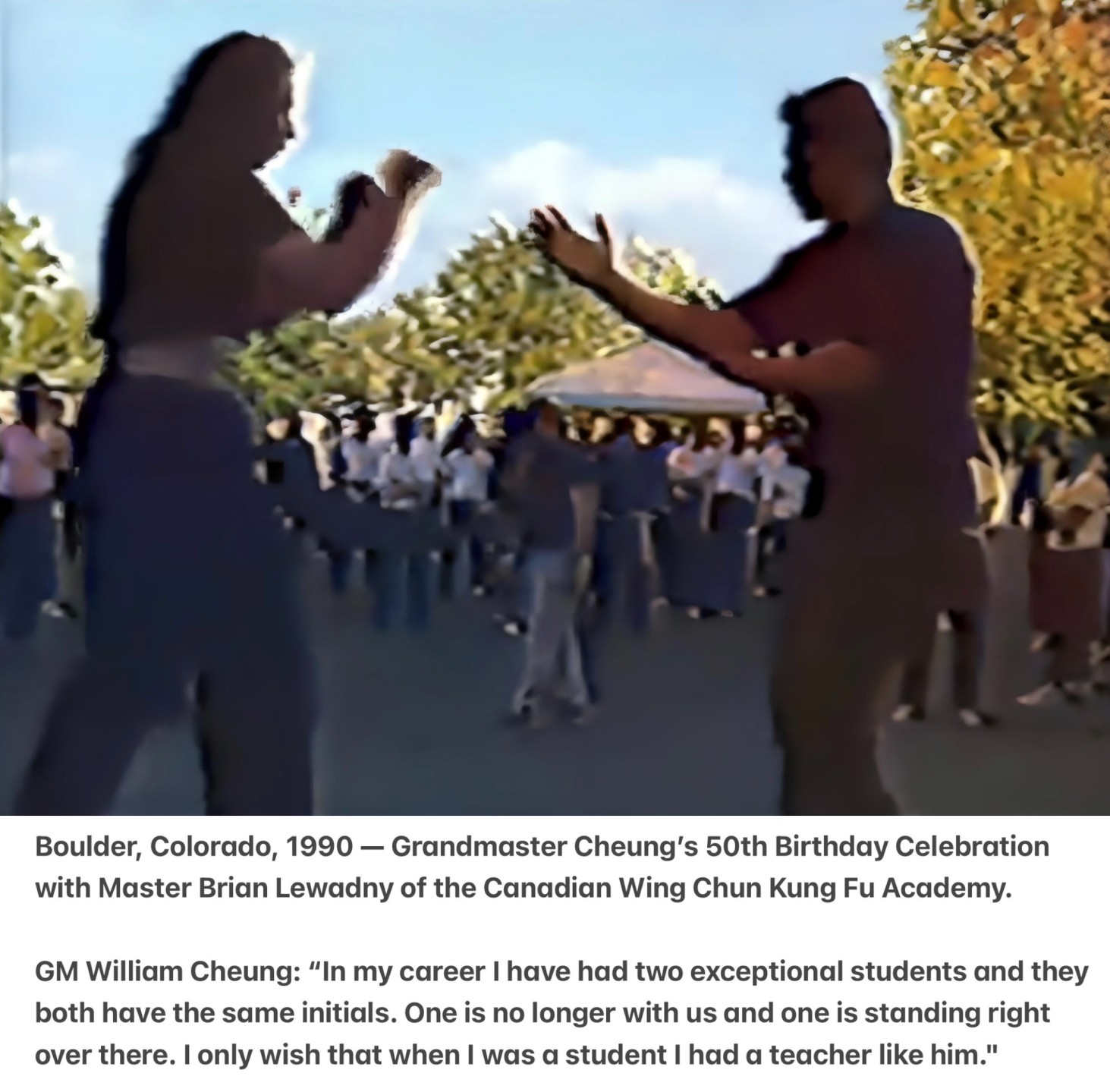
Lists of early students include Brian Lewadny, Eric Oram, Keith Mazza, Philip Redmond, Marty Goldberg, Didier Beddar, Rahsun Herkul, Freddy Wong, Shannon Moore, Robert Downey Jr., and even Bruce Lee, who was a childhood friend and fellow practitioner in Cheung’s early days. These students have established schools, hosted seminars, and built communities in North America, Europe, and Asia—spreading Wing Chun far beyond its origins.
By upholding the authentic principles and techniques handed down through Cheung, these masters maintain a strong global community grounded in respect, discipline, and true mastery. Their dedication ensures that the spirit and core of Wing Chun continue to thrive, inspiring new generations to both preserve and evolve this ancient martial art.
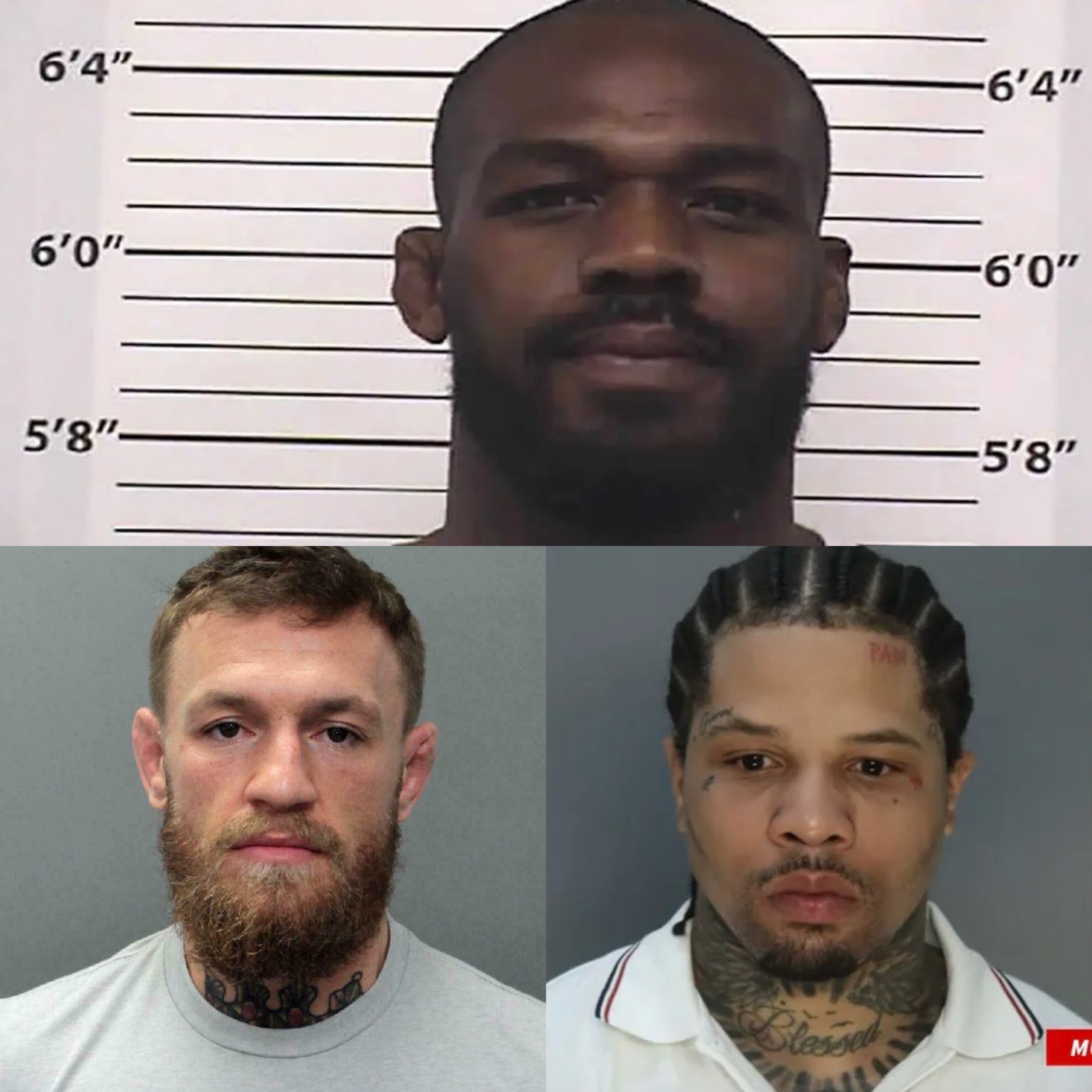
Let’s be honest — Facebook pages like BJJ Scout, websites like Calfkicker, and YouTube channels like Gabriel Varga’s all share a troubling mix of arrogance, deception, and reckless behavior. They promote and idolize notorious combat sports figures like Jon Jones, Conor McGregor, and Tank Davis, spreading attitudes that damage the spirit of martial arts. Now, they’ve turned their attention to smearing an honorable man like Grandmaster William Cheung, who has dedicated his life to teaching respect, discipline, and authentic martial skill — the exact opposite of the arrogance and chaos these critics represent.

At this stage in his remarkable life, Grandmaster William Cheung’s focus is on legacy — a legacy built on decades of honor, discipline, and genuine dedication to the martial arts. False rumors and baseless attacks may try to cast shadows, but they can never erase the profound influence he has had on students, the Wing Chun community, and martial arts worldwide. His legacy is not just intact; it shines even brighter because it is grounded in truth, respect, and a lifetime of real achievement. In a world full of noise and distractions, that kind of honor is rare — and it’s exactly what makes Grandmaster Cheung’s story one worth telling, and one that will inspire for generations to come.