
The transcript below is from the video “Bolo Yeung Revealed The SHOCKING TRUTH About Bruce Lee” by Top Discovery.
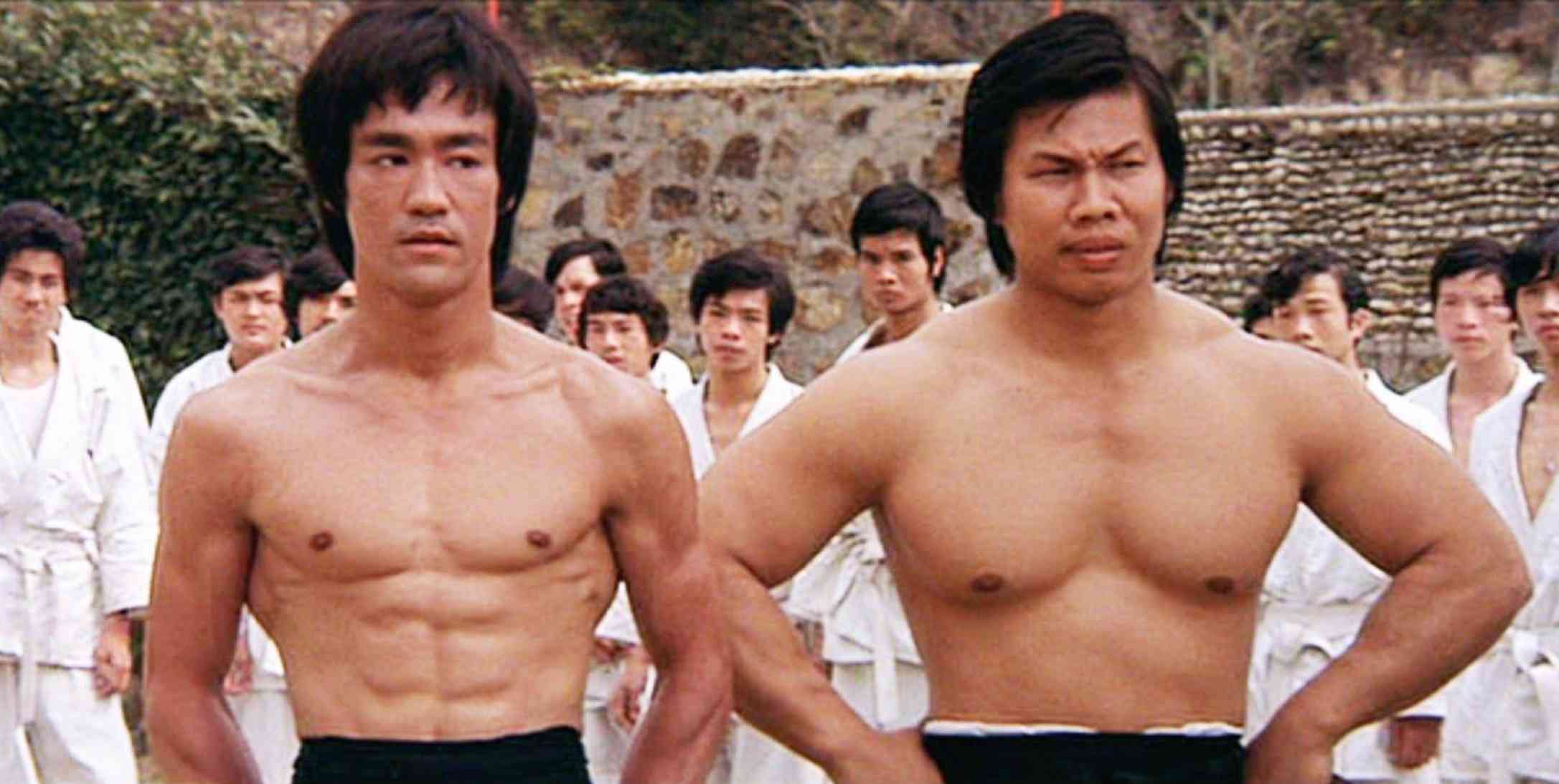
Bruce Lee: A Martial Arts Legend’s Legacy
Bruce Lee was and still remains one of the greatest martial artists of all time. His death-defying stunts, incredible feats of strength, and so much more are just a testament to his impressive physicality. Even though Bruce often stated that the mental aspect of martial arts is just as critical as the physical one, you must free your ambitious mind and learn the art of dying. Although he was one of the most popular men in the world when he was alive, Bruce achieved the miraculous feat of being an enigma, and even in death, many still want to know what the little dragon was like. In this video, we’ll dive into Bruce’s personality from the lens of one of his co-stars, Bolo, the man.

Discovery:
Bolo Young: From China to Hollywood
Have you heard about the name Bolo Young before? If you’re a millennial or a Gen Z-er, it’s possible you haven’t. But if you’re a fan of old-timey action and martial arts flicks, then there’s a pretty good chance that this name will ring a bell when you hear it. Bolo Young is one of the most iconic martial actors of all time. With his incredibly toned physique, Bolo was more than an imposing figure back in his heyday. Trust me; this man was a certified tank, and this physique made Bolo a perfect player in several classic martial arts flicks—from Legacy of Rage to Double Impact to Blood Sport, and probably his most iconic role, Bruce Lee’s Enter the Dragon.

Discovery:
Bolo’s Early Years: A Journey Through Martial Arts
Bolo was born in Guangzhou, China, on July 3rd, 1946. A lower-class kid, Bolo was definitely not used to the trappings of life in Hollywood. He was raised in a country that was still very much struggling to find its own identity, and Bolo was definitely not a stranger to instability. Looking for an outlet and a haven, Bolo turned to martial arts. He began his journey at just the age of 10, training under several renowned Kung Fu Masters. This was a period when martial arts were more than just a way for people to defend themselves or keep fit; they were a way of life firmly instilled into the fabric of society in China. For Bolo, martial arts offered a way for him to learn focus and discipline, and he took things even further by learning the ancient art of Tai Chi, which, as many experts know, is especially renowned for its ability to optimize focus and meditation.

Discovery:
Bolo’s Transition to Hong Kong: From Instability to Stardom
Still, Bolo’s time in China wasn’t to be long. At this point in his life, China was a pretty finicky hotspot to be in. The country was undergoing massive political and social change with the rise of Communism, rampant protests, and human rights abuses. Looking for a better future, Bolo flew to the part of China that was closest to the Hong Kong border and literally had to swim through the Shenzhen River to get to the island nation. Unlike China, Hong Kong was a relatively liberal society. The country was still a British colony at that point and held a much different identity from mainland China. If anything, Hong Kong was a melting pot filled with people of diverse cultures and personas, and Bolo fit rather well here.

Discovery:
Bolo’s Rise in Hong Kong Cinema: Shaw Brothers and Martial Arts Mastery
Interestingly enough, this was also the point when Bolo took a keen interest in fitness and bodybuilding. His belief was that a strong, toned body went hand in hand with prowess as a martial artist, and he took this quite seriously. In fact, Bolo went on to become the Mr. Hong Kong bodybuilding champion in 1969, an accolade that he held for a full 10 years. Still, he always maintained that he wasn’t doing any of this for personal glory. Instead, martial arts offered him a way to be in tune with his inner spirit, and with the art of Tai Chi, Bolo was able to master how to perfectly blend the physical with the spiritual to achieve true personal balance.

Discovery:
Bolo’s Entry into Hong Kong Cinema: Villains, Heroes, and Multi-Dimensional Characters
At this period, Hong Kong had a pretty young bodybuilding scene, so it was pretty easy for Bolo to fit in and thrive at the same time. Soon enough, he began to flourish big time, with a body that looked like it was sculpted by God himself. It didn’t take long before Bolo’s popularity soared across the land, and as you would imagine, this was pretty much how he got his first start in cinema and filmmaking.
Just as it was with culture itself, Hong Kong had also become a hotbed for creativity and talent in filmmaking. The country had a booming film industry, with studios like Shaw Brothers and Golden Harvest producing some classic action and martial arts movies. Just like the K-pop phenomenon that we see gaining steam worldwide these days, these movies then were also expanding beyond their homeland of Hong Kong and attracting a global audience.
In an era where filmmaking was booming, producers and directors were constantly on the lookout for unique talents who could bring a fresh perspective and a unique blend of both physicality and acting prowess to their projects. Bolo Young, the actor with Bolo’s impressive body and background in martial arts, should come as no surprise that he was the perfect fit for the movies of this time. In the late ’60s, studio executives began tapping him to play several small roles. Although most of these roles were pretty minor, they actually laid the groundwork for what would be Bolo’s blistering career.

Discovery:
Bolo’s Impact on Martial Arts Movies: Villainous Presence and Multi-Faceted Characters
Bolo’s imposing physique and stoic look made him an intimidating presence whenever he stepped onto any scene. With this deadly combo, he mostly got cast in villain roles—the type of villain not to say much, but whom everyone knew meant business when it was time to throw down. Now, although he was starting to make some waves in the acting world, Bolo was still plagued by several challenges. Primarily, this was a period when the film industry was incredibly competitive, and it meant that anyone looking to really make it here would need to persevere and establish themselves as solid talents.
To make things even worse, Bolo also had a huge language barrier to deal with. Bolo was Chinese, after all, and he had to adapt to both the language and cultural changes that were presented in Hong Kong. Still, if there was one thing he took from his early martial arts and bodybuilding days, it was the importance and power of hard work and perseverance. Soon enough, Bolo got his big break when he caught the eye of executives at Shaw Brothers Studios. The filmmaking house was one of the most prestigious in Hong Kong, with classics such as “Dolemite” and “The Five Deadly Venoms.” The bigwigs here understood that one of the most important components of any great movie is the compelling villain, and in Bolo, they found a man who could embody this role perfectly—stoic, disciplined, and unwilling to back down.

Discovery:
Bolo’s Contribution to Martial Arts Movie Genre: A Blueprint for Antagonists
For Bolo, this would be a complete career turnaround. He appeared in several of the Shaw Brothers movies—from “The Heroic Ones” to “The Deadly Duo” and “Angry Guest.” With each movie, Bolo further cemented his reputation as a martial arts star and a formidable screen presence. His portrayals of villains combined both physicality and mental prowess, strength and subtlety, and it was a combination that made him largely feared and respected at the same time.
Besides this, Bolo also drew a lot of praise for his ability to take his roles beyond just the buff and muscly persona. Bolo’s portrayals of villains showed them to be multi-dimensional characters who, in some cases, the audience could even relate to. He had a way of conveying emotion through physicality, and even though many of his roles were for characters who were the direct antagonists to the movies’ good guys, Bolo could find a way to make these seemingly bad guys look more sympathetic.
In an industry where villains had become typecast stereotyped characters, Bolo managed to stand out rather well. He brought a certain form of persona and charisma to his roles, a quality that made his characters incredibly compelling. Instead of just being an obstacle for the heroes to overcome, Bolo’s villain characters were more integral to the storylines. They often drove the plots and brought an added layer of complexity to the films.
Of course, there is also the fact that he was incredibly buff; that undoubtedly helped to burnish his reputation even more in the film industry. By working with the Shaw Brothers, Bolo was able to work alongside some of the most popular talents in Hong Kong’s film industry—from directors to choreographers to fellow actors. This proximity to excellence allowed him to refine his own acting skills, pushing himself to be better at his craft, especially as he had to work with different directors and adapt to their shooting styles.
In many ways, Bolo’s time with the Shaw Brothers was a period that defined his legacy and influence in martial arts movies. He became a model for many young actors looking to tow the same line, and his portrayal of villains became a blueprint for writers looking to create compelling antagonists. With one iconic character after another, Bolo contributed to the growth of the martial arts movie genre in more ways than one.

Discovery:
Bolo’s Relationship with Bruce Lee
Now, with Hong Kong becoming a bustling home for martial arts and movie talent, there was really only one thing left to do—collaborate. As I said earlier, the talent pool in Hong Kong’s film industry had been incredibly crowded, and with more films being released, the fans wanted more actors with different storylines.
Around the same time Bolo was starting to really blow up, there was another kid on the block who was making waves. That kid was Bruce Lee. Also of Chinese descent, Bruce had a bit of a different background and upbringing from Bolo. He was born in the United States, with his parents actually birthing him in California. As a result, Bruce automatically got American citizenship. Still, he and his parents returned to Hong Kong when he was just 4 months old.
While in Hong Kong, Bruce got an early introduction to cinema through his father, who was an opera star, and before the age of 10, Bruce had already begun starring in films with his family having considerable resources. They managed to send a teenage Bruce back to the United States in April 1959. He moved to Seattle, where he continued his education while also working at a restaurant as a live-in waiter. That same year, Bruce began teaching martial arts, creating his approach to Wing Chun and Kung Fu. He opened his first martial arts school in Seattle, and by 1961, he had enrolled at the University of Washington, where he studied arts, philosophy, and psychology, among other subjects.
Soon enough, Bruce also got his own break in acting, with roles in productions such as “The Green Hornet,” “Batman,” and “Ironside.” Bruce was already burnishing his own reputation as well. Still, Bruce was also interested in going back to his home and helping to build the native movie scene over there. As I said, Hong Kong’s movie landscape was starting to look really attractive, and Bruce probably felt a sense of patriotism telling him to return to his roots.
This was where Bruce Lee and Bolo Young finally crossed paths. The two met when they were filming a local commercial for Winston cigarettes, and from the moment they met, Bruce and Bolo hit it off. Their friendship only grew, and Bruce eventually invited Bolo to star in “Enter the Dragon,” a role that would change their lives in so many ways.

Discovery:
“Enter the Dragon”: A Milestone in Martial Arts Cinema
“Enter the Dragon” would go on to be a smashing success, and to date, it’s regarded as one of the greatest martial arts movies ever made. It told the story of a martial artist who was recruited by an international spy agency to help capture the narcotics dealer whose gang was responsible for the death of his sister. To do this, the martial artist would need to head to a remote island and participate in a brutal tournament.
In many ways, “Enter the Dragon” was a success. The movie was a cinematic hit, taking the genre of martial arts flicks to a whole new level with its artistry and choreography. At the same time, it was a commercial success, grossing over $400 million to date despite being made with a budget of about $850,000. Now, that’s some return on investment over there. Another interesting fact is that “Enter the Dragon” was actually where Bolo got his nickname. He played the character Bolo in the movie, and from then on, the name pretty much stuck. Young Z officially became known as Bolo Young.

Discovery:
Bolo and Bruce: A Solid Relationship On and Off Screen
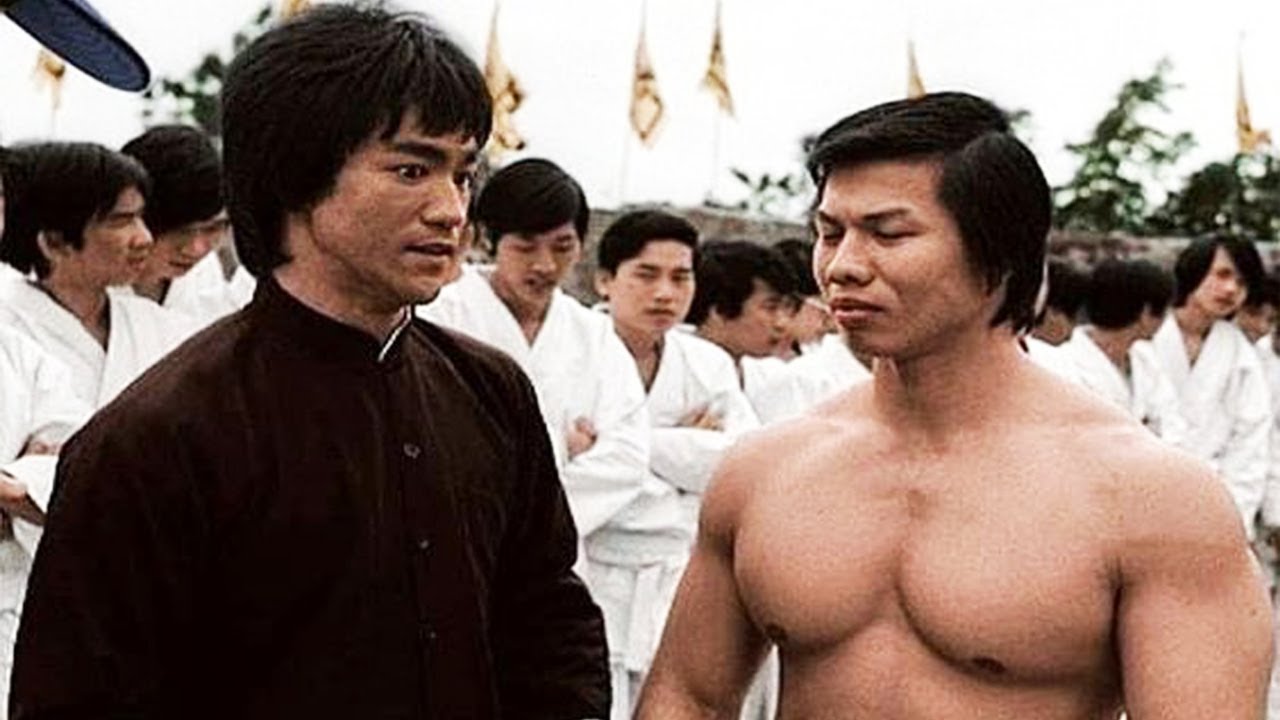
While working on “Enter the Dragon,” Bolo and Bruce struck a pretty solid relationship. They worked especially closely on fight technique, sharing knowledge and learning from each other about how best to approach things like choreography and whatnot. In fact, in one of the instances when Bolo spoke about Bruce, he shared insights on what happened on the set of “Enter the Dragon” when a movie extra apparently tried to test Bruce’s martial arts skills.
Now, if you know anything about Bruce and his fighting skills, it’s that his speed has always been renowned. The martial arts legend was said to have been so quick with his fists that he could literally strike eight punches in a single second. Of course, there was also the famous one-inch punch, which Bruce invented and mastered on his own. Here, he’d literally stand very close to his opponent and then deliver a punch that was so devastating they’d feel it all over.
Considering the fact that punches need a bit of momentum to really be felt, you can imagine just how crazy this is. Much science has gone into the one-inch punch to try to understand it, and according to experts, the speed of Bruce Lee’s one-inch punch was a staggering 118 mph or 190 km/h and delivered with enough power to knock a 200 lb or 90 kg man back 16 ft or 5 m.
The incredible speed came from his dedication to a strict training program that focused on speed, power, and endurance. After Bruce’s sad death in 1973, Bolo famously said, “There will never be another Bruce Lee. I am privileged to have had the honor of calling him my friend.” Well, he was definitely right. Many have tried to replicate Bruce’s one-inch punch, but none has quite been able to get it like the OG. Truly, it doesn’t seem like there will ever be another Bruce Lee.

The Enduring Legacy: Bolo’s Rise to Fame
At the end of the day, the relationship between Bruce and Bolo was one that was built on mutual admiration and respect. Both men were at the forefront of promoting martial arts, and the connection between them was that of kindred spirits. They trained each other, pushing each other to new heights in their artistic and professional prowess, and their partnership led to the creation of what remains one of the most iconic martial arts movies of all time.
Discovery:
Bolo’s Rise to Fame: Hollywood and Beyond
When Bruce died, the incident was an incredibly devastating blow for Bolo. To Bolo, Bruce wasn’t just a friend and a colleague; he was also an inspiration who helped to push him to new heights as a martial artist. Still, this was also a turning point for Bolo. Thanks to the success of “Enter the Dragon,” Bolo finally got the Hollywood acclaim that most actors always crave. His relationship with Bruce, as well as his impressive acting and martial art skills, led to him having new opportunities in his film career.
Bolo’s entry into Hollywood showed his versatility as an actor, and with him, he brought a unique brand of martial arts that blended both Eastern and Western fighting styles. Things hit a fever pitch when Bolo starred in “Bloodsport,” a 1988 martial arts movie. The film, shot on a budget of $1.5 million, starred leading man Jean-Claude Van Damme as Frank Dux, while Bolo played the role of Chong Li, the ruthless and formidable champion of the underground martial arts circuit.
Once again, Bolo had the opportunity to do what he did best—playing a villain while also showing off his impressive fighting skills, excellent bodily physique, and impeccable acting skills. Chong Li was one hell of a character, and his ability to portray him meant Bolo was once again catapulted into a different realm of popularity. His portrayal of Chong Li was both charismatic and menacing, making the character an especially formidable foe for the movie’s leading good guy. Indeed, he had delivered again, just as it happened with “Enter the Dragon.”

Discovery:
Bolo and Jean-Claude Van Damme: A Friendship Forged in Martial Arts
Bolo also formed a relationship with Van Damme while working on “Bloodsport.” The two fighters recognized each other’s skills, and they were more than happy to strike up a friendship. Their bond was so deep, in fact, that Van Damme offered Bolo an opportunity to star in his next film, “Double Impact.” Bolo went on to star in several other projects, serving as an inspiration for other martial artists looking to tow the same line. And even though he’s retired today, many of the biggest stars in the martial arts space count him as a major influence.

Discovery:
Bolo Young’s Enduring Legacy
He might not have been the most popular martial arts actor of his generation, but Bolo Young was definitely one force to be reckoned with. By collaborating with some of his contemporaries, especially Bruce Lee, Bolo was able to hold his own and become one of the most notable martial artists of all time. What do you think, though? Have you seen Bolo in any movie? Let us know what you think about him in the comments.