
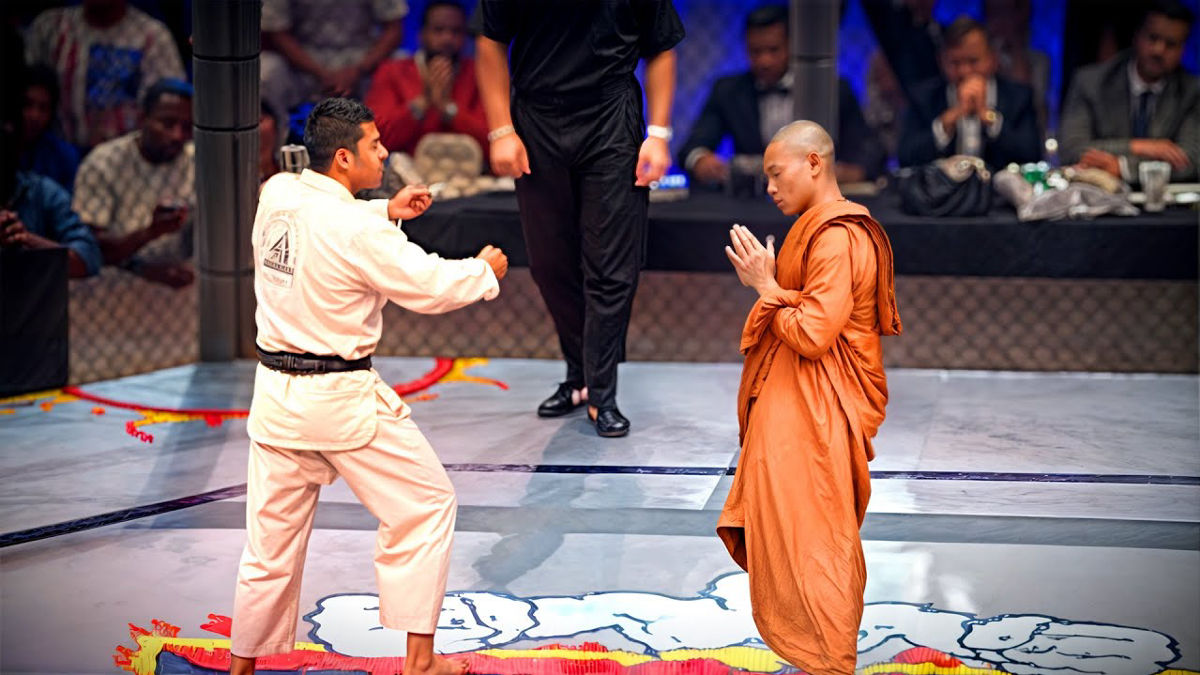

Imagine this: a Karate fighter steps into the ring, ready to prove his skills against a legendary Shaolin monk. Two ancient martial arts, one epic showdown — but who really has the upper hand? This isn’t just about punches and kicks; it’s a battle of philosophy, technique, and centuries of tradition. Buckle up as we dive into what makes these styles unique, and why the Shaolin monk just might have the edge in this legendary face-off.

The Power of Karate: Precision and Discipline
Karate is famous worldwide for its lightning-fast punches, sharp strikes, and powerful blocks. Originating from Okinawa and heavily influenced by Chinese martial arts, Karate emphasizes linear movements, speed, and strong stances. A Karateka trains relentlessly to deliver devastating strikes with pinpoint accuracy. The discipline and mental focus are intense, turning a fighter into a human weapon. Whether it’s the crisp snap of a reverse punch or the explosive energy behind a front kick, Karate’s strength lies in efficiency and raw power. You can’t overlook the years of dedication Karate fighters put into perfecting their timing and control.

Shaolin Kung Fu: The Art of Fluid Power and Versatility
Shaolin Kung Fu is an ancient Chinese martial art known for its incredible variety of techniques, from high flying kicks to close-range grappling. It’s not just about fighting — it’s a way of life rooted in spirituality and physical mastery. Shaolin monks train their bodies like temples, building explosive power, flexibility, and lightning reflexes. Unlike Karate’s mostly linear approach, Shaolin Kung Fu flows like water — blending hard and soft, fast and slow. The monk’s training includes weapons, meditation, and animal-inspired movements, making them adaptable fighters ready for any challenge.

What Karate Does Better Than Shaolin
Karate’s focused approach shines in quick, powerful strikes delivered with surgical precision. Its training hones a fighter’s speed and knockout power in a way that can end fights quickly. Karate’s kata (forms) drill muscle memory for perfect timing, and its strong stances give it unmatched stability. When it comes to direct, straightforward combat — Karate’s “one strike, one kill” philosophy is brutal and effective. For a Karate fighter, efficiency is king — minimal wasted movement, maximum impact. This makes Karate a scary opponent for anyone who underestimates its simplicity and power.

Where Shaolin Kung Fu Outshines Karate
Shaolin Kung Fu’s biggest advantage is its versatility. Monks can strike, grapple, evade, and adapt on the fly, switching from hard power moves to subtle joint locks without missing a beat. Their training in flexibility and endurance means they can last longer in a fight and absorb hits better. The spiritual and mental discipline of Shaolin monks also means they stay calm under pressure, reading opponents like an open book. Plus, their experience with weaponry and multiple combat ranges gives them tools Karate fighters rarely train for. This adaptability makes Shaolin a well-rounded, unpredictable opponent.

Head-to-Head: What Happens When They Face Off
In a fight, the Karate fighter would unleash sharp, powerful strikes, aiming to end the fight fast. But the Shaolin monk would flow, dodge, and counter with a mix of quick footwork and versatile attacks. Karate’s directness might meet Shaolin’s unpredictable angles. While Karate delivers heavy hits, Shaolin’s softer techniques and grappling could neutralize that power. It’s like a battle between a bullet and flowing water — one fast and hard, the other flexible and relentless. The fight would be intense, with momentum shifting constantly.

The Mental Game: Mind Over Muscle
Both styles demand iron focus, but Shaolin’s centuries of spiritual training give monks a mental edge. Meditation and mindfulness help monks control fear, pain, and distractions, allowing them to stay centered. Karate fighters train mental toughness too, but Shaolin combines body, mind, and spirit in a way that cultivates deeper resilience. In high-stakes combat, that calm mind can mean the difference between victory and defeat. Shaolin monks often speak of “empty mind,” a state where they react instinctively, almost like they’re one with the fight itself.

Why the Shaolin Monk Might Take the Win
When push comes to shove, the Shaolin monk’s versatility, endurance, and mental mastery give him a serious advantage. Karate’s power is undeniable, but in a longer fight with unpredictable moves, the monk’s fluid style and adaptability could wear down the Karate fighter. The ability to switch from hard strikes to soft joint locks, combined with superior stamina, means the Shaolin fighter could control the pace and style of the battle. It’s not just about landing punches — it’s about dominating the fight on every level.

Legacy and Respect: More Than Just Fighting
At the end of the day, it’s not about who’s “better” but the respect both arts command. Karate and Shaolin Kung Fu have inspired millions, taught discipline, and created legends. The humility and honor shared by fighters in both styles show that martial arts is about growth — physical, mental, and spiritual. Whether it’s the sharp strike of Karate or the flowing power of Shaolin, the true victory is in the journey, not just the fight.

So, what really happens when a Karate fighter challenges a Shaolin monk master? It’s an epic battle of power versus versatility, tradition versus adaptability. While Karate delivers deadly precision, Shaolin’s all-around mastery and mind-body unity often give the monk the edge. But the real win is for martial arts fans everywhere — because these styles continue to inspire us, challenge us, and keep the warrior spirit alive.