
Introduction
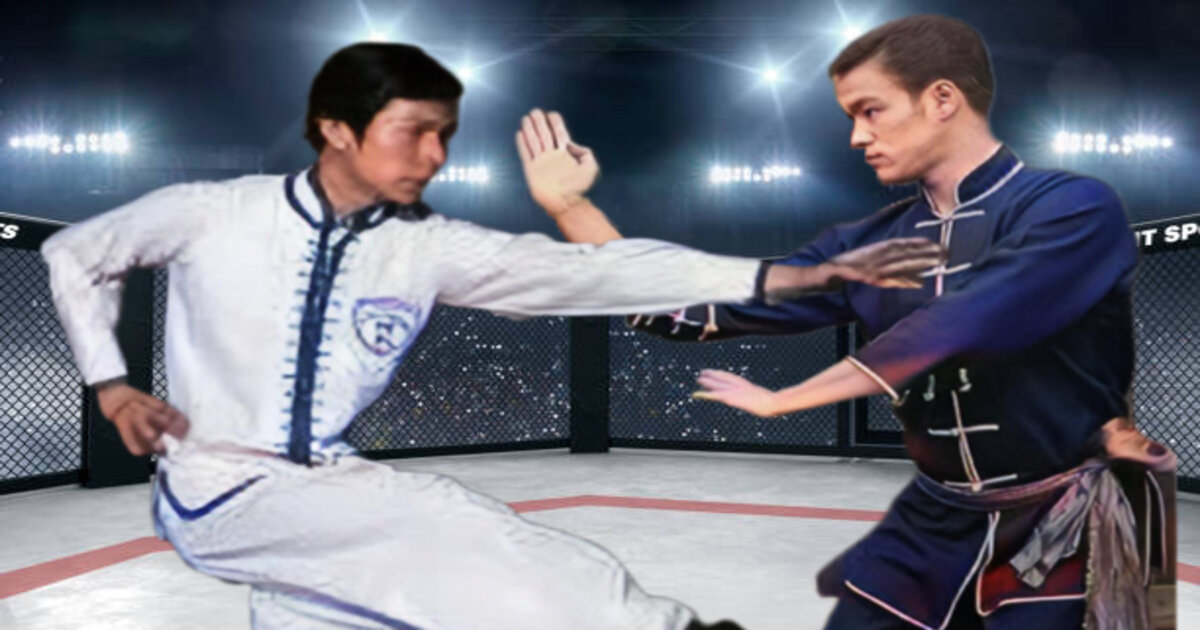
The world of martial arts is no stranger to legendary confrontations, but few battles have left as indelible a mark as the showdown between Bruce Lee and Wong Jack Man. This epic duel, which unfolded in 1964, pitted two martial artists representing different styles, Wing Chun Kung Fu and Northern Shaolin Kung Fu, against each other. Beyond being a physical contest, this encounter was symbolic of a broader ideological struggle within the martial arts community. In this storyy we will delve into the Bruce Lee vs. Wong Jack Man battle, comparing the fighters in terms of Power, Speed, Footwork, Technique, Defense, Lineage, and Intangibles, shedding light on the significance of this historic event.

Power: Analyzing Bruce Lee’s Explosive Striking and Wong Jack Man’s Fluid Elegance in Northern Shaolin Kung Fu
Power is a fundamental aspect of martial arts, and in this regard, both Bruce Lee and Wong Jack Man possessed unique attributes. Bruce Lee, famed for his incredible physical conditioning, generated tremendous power with his explosive strikes. His “one-inch punch” exemplified his ability to concentrate force into a short distance, sending opponents flying. Lee’s power was not limited to punches; his kicks were equally devastating.
On the other hand, Wong Jack Man, with his background in Northern Shaolin Kung Fu, relied on a different type of power. Northern Shaolin Kung Fu emphasizes fluid and acrobatic movements, which can deliver powerful, sweeping kicks and intricate hand techniques. Wong’s power was rooted in the dynamic execution of Northern Shaolin forms.
Comparatively, Bruce Lee’s power was more direct and immediate, while Wong Jack Man’s power was expressed through elaborate sequences of movement. In the context of their battle, it was Bruce Lee’s straightforward power that took center stage, overwhelming his opponent in the initial moments of their encounter.

Speed: An Examination of Two Distinct Approaches to Speed in Combat
Both Bruce Lee and Wong Jack Man were known for their speed, but they exhibited it in distinct ways. Bruce Lee’s speed was almost superhuman. He possessed lightning-fast reflexes, making him incredibly elusive in combat. His ability to close the distance between himself and an opponent in the blink of an eye was legendary. Furthermore, his rapid strikes and counters often caught opponents off guard.
Wong Jack Man, with his training in Northern Shaolin Kung Fu, displayed a different style of speed. Northern Shaolin’s emphasis on fluid and flowing movements allowed him to transition smoothly between techniques. His agility and swiftness in executing kicks and intricate hand combinations were awe-inspiring.
Comparing their speed, Bruce Lee’s was more instantaneous and explosive, whereas Wong Jack Man’s lay in his ability to sustain intricate movements with grace and finesse.

Footwork: Analyzing Bruce Lee’s Precision and Economy of Movement vs. Wong Jack Man’s Elaborate and Fluid Footwork
Footwork plays a crucial role in martial arts, influencing a fighter’s balance, mobility, and ability to control the fight’s distance. In this aspect, both Bruce Lee and Wong Jack Man brought their unique styles to the forefront.
Bruce Lee, influenced by Wing Chun’s close-quarter combat, showcased swift and precise footwork. He moved with economy and efficiency, often shifting in and out of striking range to maximize his effectiveness. His footwork allowed him to dart in, deliver devastating attacks, and retreat swiftly to minimize the risk of counterattacks.
In contrast, Wong Jack Man’s footwork, grounded in Northern Shaolin, was more elaborate and acrobatic. His movements involved intricate patterns, circular motions, and high kicks, reflecting the stylistic elements of Northern Shaolin Kung Fu. This footwork enabled him to navigate around opponents with grace.
Ultimately, the footwork employed by Bruce Lee and Wong Jack Man represented the distinctive characteristics of their respective martial arts backgrounds—simplicity and directness versus fluidity and versatility.

Technique: Comparing Bruce Lee’s Practical Efficiency with Wong Jack Man’s Diverse Arsenal of Techniques
Technique is at the core of martial arts, encompassing a fighter’s ability to execute strikes, blocks, and counters effectively. Bruce Lee, deeply rooted in the principles of Wing Chun Kung Fu, had honed a system that emphasized practicality and economy of movement. His techniques were straightforward, focusing on exploiting an opponent’s weaknesses with maximum efficiency.
Wong Jack Man, with his Northern Shaolin Kung Fu training, brought a more elaborate and varied set of techniques to the fight. His style featured a wide array of kicks, hand techniques, and intricate forms. He incorporated sweeps, spins, and acrobatic moves into his repertoire.
In their clash, Bruce Lee’s techniques were centered on simplicity and effectiveness, while Wong Jack Man displayed a broader spectrum of techniques, showcasing the diverse array of moves Northern Shaolin Kung Fu offered.

Defense: Bruce Lee’s Precise Blocks and Traps vs. Wong Jack Man’s Evasive Maneuvers and Swift Parries
Defense is the art of minimizing an opponent’s attacks and responding effectively to incoming strikes. Bruce Lee, steeped in the teachings of Wing Chun, had mastered a defensive system that relied on blocking, trapping, and countering in close-quarters combat. His techniques allowed him to deflect and neutralize threats with precise movements.
Wong Jack Man’s Northern Shaolin background brought a different approach to defense. His style emphasized evasive maneuvers, flowing motions, and complex parries. Wong relied on his ability to avoid attacks through agility and swift changes of position.
In their confrontation, Bruce Lee’s defense was about intercepting and controlling the opponent, whereas Wong Jack Man’s defense was rooted in mobility and fluidity, enabling him to avoid his adversary’s attacks.

Lineage: Bruce Lee’s Innovative Jeet Kune Do vs. Wong Jack Man’s Rich Tradition of Northern Shaolin Kung Fu
Lineage is a critical aspect of martial arts, as it connects a practitioner to the historical roots of their style. Bruce Lee had a well-documented lineage in Wing Chun Kung Fu, tracing back to his legendary teacher, Ip Man. He took the core principles of Wing Chun and modified them to create his own martial philosophy, Jeet Kune Do, which rejected strict adherence to tradition.
Wong Jack Man’s lineage was based in Northern Shaolin Kung Fu, a traditional Chinese martial art with a rich heritage dating back centuries. His training was rooted in the classical forms and techniques passed down through generations.
The two fighters’ contrasting lineages represented the broader divide within the martial arts community between traditionalists and those advocating for modernization and innovation.

Intangibles: Bruce Lee’s Charisma and Confidence vs. Wong Jack Man’s Commitment to Traditional
Intangibles refer to the attributes that cannot be easily quantified but have a significant impact on a fighter’s performance. In the case of Bruce Lee, his charisma, confidence, and charisma played an enormous role in his success. His belief in himself and his martial philosophy inspired countless individuals and left a lasting legacy.
On the other hand, Wong Jack Man’s determination to protect traditional martial arts could be considered his intangible. He saw himself as a guardian of classical Kung Fu, and his refusal to be defeated by an upstart like Bruce Lee was an essential part of his identity.
The intangibles of each fighter reflected their personalities and philosophies, with Bruce Lee’s charisma and confidence contrasting Wong Jack Man’s determination to preserve the martial arts of the past.

Conclusion
The legendary showdown between Bruce Lee and Wong Jack Man represented more than a simple contest of physical skills; it was a battle of ideologies within the martial arts community. In comparing Power, Speed, Footwork, Technique, Defense, Lineage, and Intangibles, it becomes evident that each fighter brought their unique strengths and attributes to the ring.
Bruce Lee, with his explosive power, blinding speed, and practical techniques, showcased the evolution of martial arts towards modernity and efficiency. Wong Jack Man, with his Northern Shaolin Kung Fu, exemplified the rich tradition and complex forms that characterized classical Chinese martial arts.